


Athletes Need Mental Health Support
By Sophia Royo Begueria | Behavioral Health Intern, Future Focused Education

Sophia (left) presenting at Future Focused's EdUprising Conference, 2026.
I felt a pop in my knee, and in the blink of an eye, I was falling to the grass, unable to get back up. The crowd got quiet, and I saw my mom running towards me. The game didn’t immediately stop, but for me, everything did. I remember staring up at the stadium lights, trying to process what had just happened while pain rushed through my leg. Players kept moving around me; the whistle still hadn’t blown, and yet time felt frozen.
“Are you okay? Do you need help getting up?” a player from the opposite team asked.
At that moment, my mind wasn’t thinking about the score. I wasn’t thinking about the rest of the season. I was thinking: what just happened to me?
What unfolded after the game was more than just physical recovery; it was silence, isolation, and a version of myself I didn’t recognize. Sitting on the bench at practice, I pretended I was paying attention when in reality I was trying not to cry while watching my team warm up. Driving home from an orthopedic appointment, I would sit in the car trying to plan around new return dates and timelines. Six months. Nine months. Maybe longer. Everyone talked and asked about my knee, but almost no one asked where my mind was at.
As athletes, we’re trained to be strong, to persevere and push through, and to continue to show up no matter what. But what happens when you physically can’t? Your body is forced to a complete stop, but your mind has never known how. That’s the part no coach or adult can train you for.
Two weeks after my ACL injury I realized that being injured doesn't only take away your ability to play and affect the game or the season. Very quickly your whole routine changes, and you can’t find a sense of purpose or identity without being able to play the sport that you’ve been playing for so long.
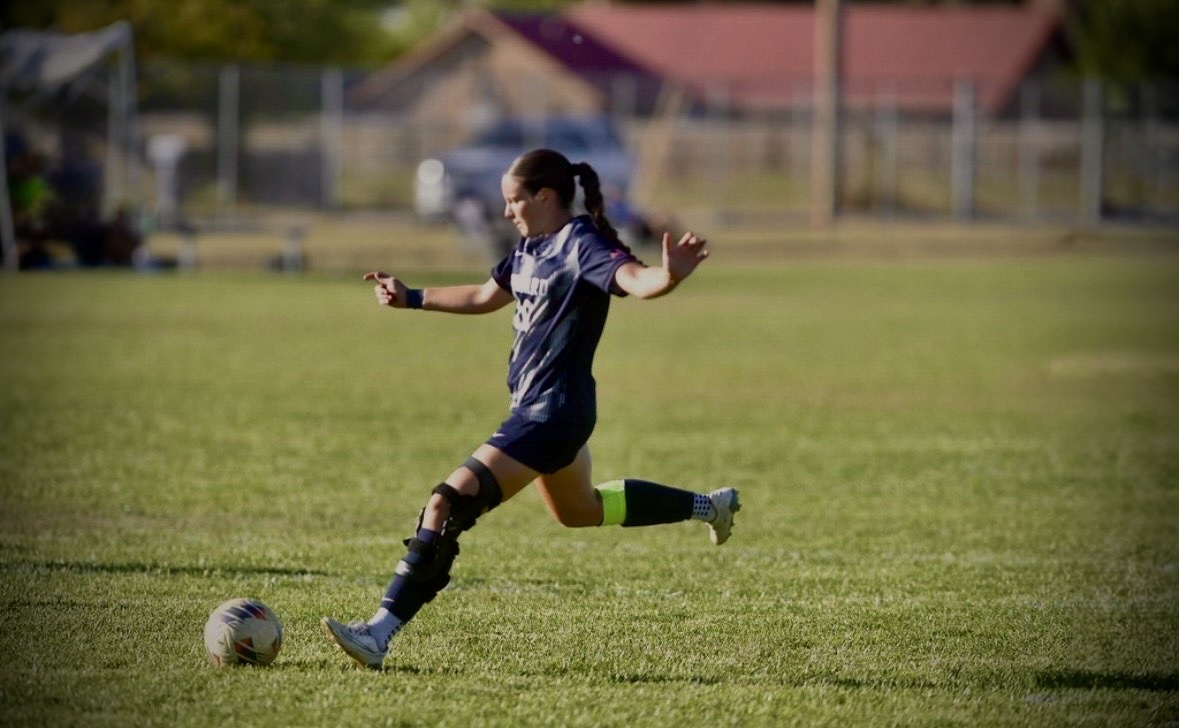
Sophia playing soccer.
The Power of Advocacy
Just when I felt lost in my own recovery, I was selected to join the Future Focused Education Youth Mental Health Group Internship, an opportunity that changed the direction of my life.
Through my work with Future Focused Education, I learned how powerful youth voice can be when it is taken seriously. I became certified in Teen Mental Health First Aid and gained experience with leadership, advocacy, public speaking, and working with other students to create change around mental health and community issues. It also taught me how to listen with empathy, share my perspective confidently, and help create spaces where young people feel valued.
I also learned how to support my advocacy with research and data. For example, last year the National Institutes of Health (NIH) did a review of studies about athletes’ mental health and quality of life related to injury. They found that recognizing and addressing mental health as “a central component of injury management” helped athletes struggle less with common symptoms post-injury—anger, depression, and anxiety—and when they were supported with mental health, they recovered quicker than those who weren’t.
Still, in many athletic spaces, mental health is treated like an afterthought. At the high school level, coaches are one of the first adults to notice when something is off, or they are the ones who completely miss it. A quiet athlete. A frustrated one. Someone who suddenly seems fully shut down. These aren’t just "snappy attitudes” or “lack of discipline.” Sometimes, they’re signs of something deeper.
When coaches don’t have the tools to recognize that their players are suffering, student-athletes suffer alone, in silence. It shouldn’t have to take an injury, or a breaking point, for that mental health support to exist.
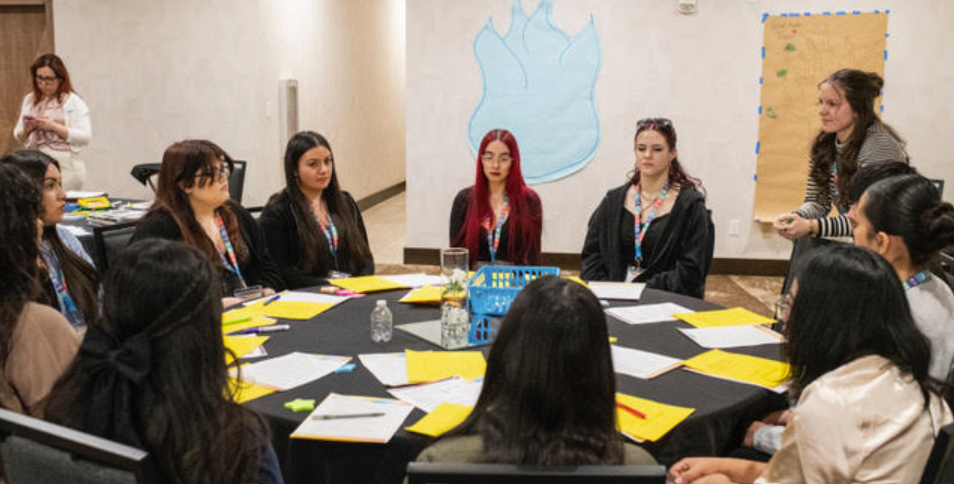
Sophia (top right) with a group of young people at the EdUprising Youth Strand, 2026.
How you can help
Coaches are trained in plays, performance, and injury prevention, but not in how to support a student-athlete’s mental health. The NIH study found that the best practice was building mental health into the training program from the beginning. The first step is to train coaches to start incorporating these things into their programs, especially at the high school level. They need an understanding of stress, burnout, anxiety, and the emotional realities of being a student-athlete. This is why I am advocating and asking the New Mexico Activities Association to require their coaches to earn the Youth Mental Health First Aid certification. At the end of the day, athletes are not just players. They are humans carrying pressures we don’t always see.
So here’s the question: how many athletes are struggling right now and no one knows? And more importantly, what are we going to do about it?
I’m asking all of you to be part of the solution. If you’re a student athlete, check in on your teammates and don’t be afraid to speak up. If you’re a coach, make sure your athletes know they’re valued for more than just their performance. If you’re a parent, create space for honest conversations and really listen. Advocate for more youth mental health training, start conversations that might feel uncomfortable, and check in not just on how people are performing but on how they’re actually doing.
Because one moment, one injury, one conversation, or one missed sign can change everything.
Supporting athletes through recovery should include more than rebuilding strength; it should include the whole person and it should protect their mental health. This is a call for action! And the time is NOW.

To find out more about Future Focused Community Care Collective and/or internships in Behavioral Health, check out our website and get in touch: https://futurefocusededucation.org/community-care-collective/.